

The effects can continue after a relationship ends. Confusion and self-doubt rarely disappear on command. Recovering from a narcissistic relationship can involve recognising patterns such as gaslighting, manipulation, boundary violations and sudden shifts between kindness and cruelty, then rebuilding trust in your judgement. Recovery isn’t a straight line. Safety, mourning and reconnection can be useful phases, and you may move between them.
If you’re questioning what happened, struggling to leave or grieving someone who also hurt you, your reaction deserves care, not blame. Narcissistic abuse isn’t a formal diagnosis, and you don’t need a label to take the impact seriously. The relationship may have shaken your sense of what’s real. Recovery begins with small, steady steps back towards yourself.
This guide explains what narcissistic abuse can involve and why healing may feel difficult. You’ll find practical steps for different stages, ways to meet self-blame with self-compassion, and signs that professional support could help. The aim isn’t to impose a timeline or rush you into feeling fine. It’s to help you regain safety, mourn what was lost and reconnect with the parts of life that are yours.
Key Takeaways
- Look for repeated patterns of manipulation, boundary violations and control rather than relying on a label to validate what you experienced.
- Reconnect with trusted people and meaningful activities; steady support can help you feel less isolated as you rebuild.
- When self-blame surfaces, practise noticing the judgement without treating it as fact. Self-compassion is a skill you can strengthen.
- Use safety, mourning and reconnection as flexible recovery phases, not a strict timetable you must follow.
- Consider professional support if you want help recognising manipulation, restoring boundaries or making sense of the relationship’s impact.
When Should You Seek Professional Support?
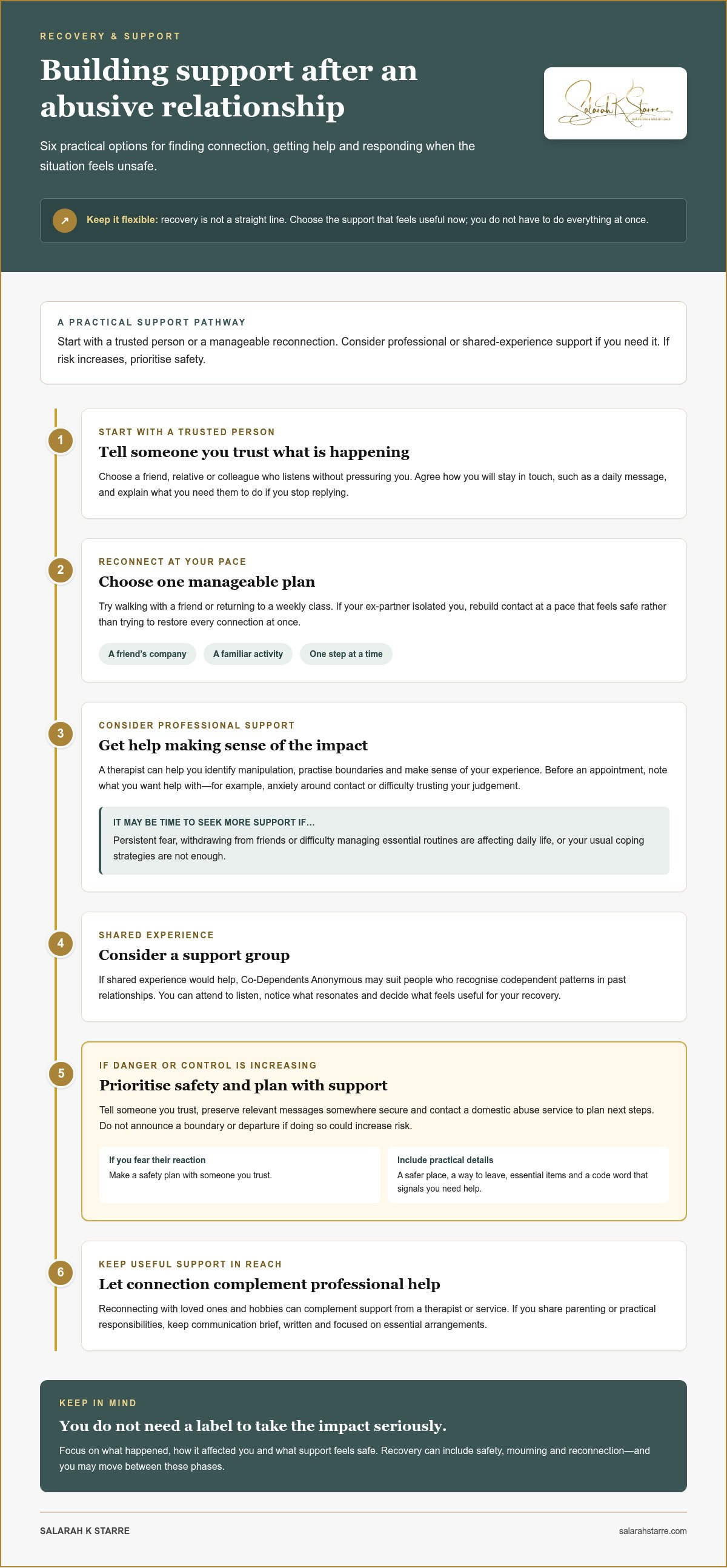
If it feels safe to end contact with your ex-partner, state your boundary once, then block or mute calls, emails and social media. If you share parenting or practical responsibilities, keep communication brief, written and focused on essential arrangements.
If you fear your ex-partner’s reaction, make a safety plan with someone you trust. Identify a safer place, a way to leave, essential items to take and a code word that signals you need help.
UK support includes Refuge’s National Domestic Abuse Helpline in England, Live Fear Free in Wales, Scotland’s Domestic Abuse and Forced Marriage Helpline, and Northern Ireland’s Domestic and Sexual Abuse Helpline. Galop and the Men’s Advice Line offer additional support for LGBTQ+ people and men. Contact emergency services if you’re in immediate danger.
If an abusive ex-partner has affected your child, keep explanations calm and age-appropriate, and reassure them that the abuse isn’t their fault. For co-parenting, use brief written messages about practical arrangements, keep records and seek specialist support if communication feels unsafe.
- Tell one trusted person what’s happening. Choose a friend, relative or colleague who listens without pressuring you. Agree on a specific way to stay in touch, such as a daily message, and explain what you need them to do if you stop replying.
- Reconnect with people and activities that support you. Choose one manageable plan, such as walking with a friend or returning to a weekly class. If your ex-partner isolated you, rebuild contact at a pace that feels safe instead of trying to restore every connection at once.
- Consider professional support if the effects disrupt daily life. A therapist can help you identify manipulation, practise boundaries and make sense of your experience. Before an appointment, note what you want help with, such as anxiety around contact or difficulty trusting your judgement.
- Consider a support group if shared experience would help. Co-Dependents Anonymous may suit people who recognise codependent patterns in past relationships. You can attend to listen, notice what resonates and decide what support feels useful for your recovery.
- Act promptly if the situation feels dangerous or increasingly controlling. Tell someone you trust, preserve relevant messages somewhere secure and contact a domestic abuse service to plan next steps. Don’t announce a boundary or departure if doing so could increase the risk.
- Seek more support when your usual coping strategies aren’t enough. Persistent fear, withdrawing from friends or difficulty managing essential routines can be reasons to speak with a therapist or support service. Reconnecting with loved ones and hobbies can complement professional help.
What Is Narcissistic Abuse?
Recognise narcissistic abuse through repeated behaviour, not a label or one difficult argument. The pattern can involve emotional harm, manipulation and control.
-
Recognise abuse dynamics
Track what happens before, during and after conflict. For example, note whether a partner is supportive and kind, then abruptly becomes cruel or manipulative. Narcissistic personality disorder can affect relationships with family, friends and romantic partners, but narcissistic abuse itself isn’t a formal diagnosis. Focus on behaviour and its impact rather than trying to diagnose someone.
-
Identify common manipulation tactics
Write down specific actions, such as lying, crossing boundaries or suddenly withdrawing communication. The silent treatment may mean withholding replies or acting as if you don’t exist. Notice whether it follows a disagreement and leaves you feeling pressured to comply. Narcissistic abuse can also involve isolating a partner from their social support system. Look for recurring tactics that restrict your choices or maintain control.
-
Acknowledge gaslighting and emotional abuse
Record what happened and what was said when gaslighting leaves you doubting your memory or judgement. For instance, compare a message with a later claim that the conversation never happened. Gaslighting and other emotional abuse can make your perceptions feel unreliable. Treat that confusion as a reason to pause and reflect on the interaction, not as proof that your recollection is wrong.
- Separate an isolated disagreement from a repeating pattern. Describe the behaviour without labels: “They ignored my boundary about seeing my friend, then blamed me for being upset.” Compare examples from different situations. Repeated dismissal, manipulation or punishment matters more than a single argument. Keeping a record can help you recognise whether the relationship repeatedly undermines your autonomy and wellbeing.
- Notice the effect on your relationships. List changes you’ve made, such as cancelling plans, hiding conversations with friends or avoiding family gatherings. Isolation can develop gradually, so compare your social life before and during the relationship. Ask whether you changed these routines freely or because you anticipated anger, criticism or silent treatment. Those details can help you identify the dynamics at work.
- Use precise language to describe what happened. Instead of deciding whether someone is a narcissist, name the action: “They denied saying it,” “They mocked my boundary,” or “They stopped speaking to punish me.” This keeps your account grounded in observable behaviour and helps you explain the situation to someone you trust, without needing a diagnosis to validate your experience.
Self-compassion and resisting self-blame
Use small, repeatable actions to rebuild your sense of self. Self-compassion means responding to painful feelings with care, rather than treating them as proof of failure.
-
Notice triggers and self-judgment
Pause when a memory, message or familiar situation sparks a strong feeling. Name what you notice, such as tension, fear or the thought, “I should have known.” Separate the trigger from your worth: a reaction is information, not a verdict. If you catch yourself judging, write down the exact words you’re using and consider what you’d say to a friend in the same situation.
-
Build consistent self-care routines
Choose one manageable routine for sleep, food or movement, then make it specific. For example, prepare breakfast the night before or take a short walk after lunch. Mindfulness, yoga and other relaxation techniques can help you pause and notice what your body needs. Keep the routine flexible. If a difficult day disrupts it, restart with the next small action rather than criticising yourself.
-
Respond to hindsight without self-blame
When you think, “I should have left sooner,” add the context you had at the time. You may have been responding to mixed behaviour, pressure or concern for someone else. Acknowledge what you know now without expecting your past self to have the same clarity. Try writing two lines: what you wish had happened, and what choices felt possible then.
- Practise a kinder replacement phrase. Choose one sentence that feels believable, such as, “I’m learning to trust myself again.” Repeat it whenever self-judgment appears, even if that happens 50 times a day. The aim isn’t to force positivity or erase painful memories. It’s to interrupt the automatic attack and make room for a fairer response.
- Make space between a feeling and an action. When a memory brings a rush of emotion, plant both feet on the floor and name five things you can see. Then decide whether you need rest, a supportive conversation or time away from a triggering message. This pause can help you respond to the present instead of letting an old situation dictate your next step.
- Reconnect with qualities that are yours. Ask someone you trust what they value about you, what feels distinctive and what changes they noticed during the relationship. If you’re part of a support group, you might ask another member the same questions. Compare their observations with your own memories, then record qualities or interests you want to make room for again.
What Helps at Each Stage?
Judith Herman’s framework describes three phases: safety, mourning and reconnection. They aren’t a strict sequence. You may move between them as recovery unfolds.
-
Recognise the stages of recovery
Start by identifying what feels most urgent today: safety, grief or rebuilding connection. In the safety phase, focus on stability and daily needs; during mourning, make room for loss; in reconnection, explore interests and relationships beyond the past. If grief returns after a positive step, don’t treat it as failure. The phases can overlap or recur.
-
Consider prolonged relational trauma
Notice how prolonged stress affects your routines, relationships and sense of safety. For example, you may feel on edge after a message, struggle to sleep or avoid decisions that once felt manageable. These experiences can follow a difficult relationship, but they don’t establish a diagnosis of complex PTSD. Record what you notice and discuss the effects with a qualified health professional.
-
Seek professional help
Choose a therapist or other qualified professional if distress disrupts everyday life or feels difficult to manage alone. Before meeting, write down one situation you want help understanding, such as feeling afraid to disagree or doubting your memory. Ask for support with boundaries, emotional responses and recovery goals. A professional can help you explore what fits your needs without requiring you to prove your experience.
-
Explore trauma reprocessing
Ask a qualified mental health professional whether trauma-focused work suits your situation. Begin by describing what you hope will change, such as feeling less overwhelmed by a memory or more settled after contact with a former partner. Don’t force yourself to recount painful events before you feel ready. Agree on a pace, grounding strategies and a way to pause if distress rises.
- Restore practical safety first. Choose one stabilising action, such as limiting contact with an abusive partner or organising a calmer place to sleep. Then attend to basic routines: plan a meal, make time for rest and add gentle movement. These steps don’t erase trauma, but they can create structure as you work towards feeling safer and more present.
- Make room for grief without putting it on trial. Name what you’re mourning: the relationship, the future you expected or time you feel you lost. Write each loss separately, then choose one supportive action, such as speaking with someone you trust or taking a quiet walk. Reconnection can include remembering and discussing the relationship without feeling destabilised by every detail.
Why recovery from a narcissistic relationship can be difficult
Recovery can feel slow because emotional confusion, anxiety and practical ties may continue after separation. There’s no single timetable. Ongoing contact, the relationship’s impact, safety and available support can all shape how healing unfolds.
-
Identify challenges to recovery
Track what makes daily life harder, such as anxiety after a message or doubting your instincts. A former partner’s repeated claims may leave you questioning what happened, even after the relationship ends. Practical ties can also prolong contact and bring painful interactions back into focus. Write down the trigger, your response and what support would help next.
-
Consider factors affecting recovery time
Consider the conditions shaping your recovery instead of measuring yourself against someone else. Ongoing contact, shared responsibilities, isolation and the strength of your support network can affect how much space you have to heal. A woman quoted in the article said ending her marriage took two wasted years. Her experience shows why recovery can’t be reduced to a standard deadline.
- Separate progress from the absence of painful feelings. Notice one concrete change, such as sleeping more steadily, making a decision without seeking your ex-partner’s approval or enjoying time with a friend. A difficult day doesn’t erase that progress. Record what felt different, then identify what helped, such as limiting contact or asking someone to listen.
- Notice when living arrangements or contact keep reopening distress. For example, a necessary exchange about belongings may trigger anxiety long after the relationship ends. Plan practical communication in advance, keep it focused on the task and arrange support afterwards. If contact is unavoidable, identify what you can control, such as the channel, topic and time you respond.
- Challenge the story that you should have known sooner. Write down what you understood at the time, what information you had and what made leaving difficult. Then compare that with what you recognise now. This can help distinguish hindsight from responsibility and give you a clearer account of your choices, rather than letting a former partner’s narrative define them.
- Build support around the life you want to reclaim. Choose one activity, person or routine that helps you find yourself outside the relationship. A regular walk with a friend, returning to a hobby or speaking with a therapist can offer structure and perspective. If guided reflection feels useful, explore deeper healing support as one possible part of your wider recovery.
Salarah K Starre: The Magnetic Recalibration
The Magnetic Recalibration offers personal-growth support alongside recovery. After relationship abuse, you may want space to reflect on patterns, reconnect with your priorities and decide what you want to build next. This coaching programme may suit you when you’re ready to focus on personal change, rather than seeking help with immediate safety or clinical mental health needs.
Choose support that fits the work you need. One to one Coaching offers individual coaching, while Manifestation Workshops provide a group setting. These are distinct from clinical psychotherapy and don’t replace specialist help for abuse or trauma. There’s no need to rush into a new step; let your needs guide your choice.
If you’d like to explore The Magnetic Recalibration, visit Salarah K Starre’s website or contact her.
Choose the next step on your own terms
Healing doesn’t require you to turn pain into a lesson before you’re ready. As you continue recovering from a narcissistic relationship, let your next choice come from what feels steady and meaningful now. That might mean protecting time for yourself, reconnecting with an interest or exploring a new direction at your own pace.
For personal-growth support beyond the practical steps in this guide, Salarah K Starre offers The Magnetic Recalibration, Speaking Engagements and Manifestation Workshops. These support reflection and personal development, not specialist help with abuse, trauma or immediate safety concerns. Choose what fits the work you want to do, and leave what doesn’t.
If you’re ready to explore whether this work suits your next step, contact Salarah K Starre. You can move forward thoughtfully, with your needs and choices at the centre.
Frequently Asked Questions
What Does Recovery Actually Look Like in the Later Stages?
Later in recovery, the relationship may become part of your history rather than the centre of every decision. You might discuss what happened without losing the rest of your day, make plans without anticipating your former partner’s response or feel interested in new connections. Integration doesn’t mean forgetting or approving what happened. Notice whether memories still disrupt your choices, and recognise the growing freedom in the decisions you make now.
What Does the Research Actually Say About This Healing?
Recovery is varied and cyclical, not a fixed sequence with a set finish line. Judith Herman’s framework identifies safety, mourning and reconnection, while recognising that people may move between these phases. Personal accounts can illustrate individual experiences, but they don’t establish a universal timeline. Use guidance to reflect on your needs, not as a test you must pass.
What Makes a Recovery from a Narcissist Different?
Recovery may involve rebuilding trust in your perceptions after repeated manipulation, blame or boundary violations. For example, you might rehearse a simple message because past disagreements were turned against you. Ongoing contact, including co-parenting, can also bring old dynamics into present-day decisions. Focus on what helps you regain agency now, rather than comparing your experience with someone else’s recovery.
Why Does Anger Arrive So Late, and What Comes After It?
Anger can surface after separation, when immediate demands ease and you have more space to recognise what felt unfair. It may point to a crossed boundary or a need you had set aside. Give the feeling a safe outlet, such as writing an uncensored letter you don’t send, then identify the boundary it reveals. Grief, relief or renewed sadness may follow. None means you’re moving backwards.
What Are Common Signs of Emotional Abuse or Narcissistic Behaviour in a Relationship?
Look for repeated behaviours that undermine your confidence or restrict your choices. Examples include denying conversations you clearly remember, mocking your boundaries, lying or using silence to punish you. A sudden switch from warmth to cruelty can leave you constantly trying to regain approval. One incident alone doesn’t establish a pattern. Consider how often these actions occur and how they affect your daily decisions.
How Can I Rebuild Self-esteem and Trust After Emotional Abuse?
Rebuild trust through small decisions you make and honour. Choose what to eat, which friend to see or how to spend an evening, then notice how it feels to decide without seeking approval. Keep a record of promises you’ve kept to yourself, even simple ones such as taking a walk. When self-doubt rises, separate the feeling from the evidence and ask what you would advise someone you care about.
What Therapy or Counselling Helps People Recover from Narcissistic Abuse?
A therapist can help you make sense of manipulation, strengthen boundaries and explore how the relationship affects you now. At an initial appointment, describe one recurring difficulty, such as anxiety before contact or trouble trusting your memory. Ask how sessions will address your goals and what you can do if a conversation feels overwhelming. A support group can offer another setting to hear how others approach similar challenges.
What Are Signs of Trauma, Anxiety or Depression After an Abusive Relationship, and When Should I Seek Help?
Possible signs include persistent anxiety, sleep problems, feeling constantly on edge, withdrawing from friends or struggling with everyday tasks. These experiences can have different causes, so a symptom alone doesn’t confirm a diagnosis. Speak with a health professional if distress continues, worsens or interferes with work, relationships or self-care. Beforehand, note what you’ve noticed, when it occurs and what helps you feel more settled.


