

What does “how trauma is stored in the body” mean if the body doesn’t hold a literal recording of what happened? A tight chest, clenched jaw or sudden urge to withdraw can feel connected to the past, but these sensations aren’t proof of a hidden memory or a sign that something is wrong. The body can learn protective response patterns, while stress, health and present circumstances can influence how those patterns show up.
If you’ve struggled to link a past experience with a reaction you’re having now, it makes sense to want a clear explanation. You deserve more than the dramatic claim that every ache or sensation is trauma speaking. This article explains what body-based responses can mean, what they can’t tell you, and how to notice possible patterns without diagnosing yourself.
We’ll look at how the nervous system responds to threat, why familiar situations can trigger strong reactions, and why bodily sensations aren’t the same as literal memories. You’ll also find grounded ways to reflect on your responses and guidance on when to seek support from a qualified mental-health professional.
Key Takeaways
- “How trauma is stored in the body” describes learned protective responses, not memories physically lodged in tissue.
- Reminders of perceived danger may prompt body responses, even when you’re currently safe.
- Tension, changes in breathing or feeling shut down can be worth noticing, but they don’t prove trauma or provide a diagnosis.
- If a response feels overwhelming, try pausing and orienting to the present. Stop if the exercise increases your distress.
- Body awareness can support personal reflection, while coaching is different from clinical assessment and treatment.
What does it mean when people say trauma is stored in the body?
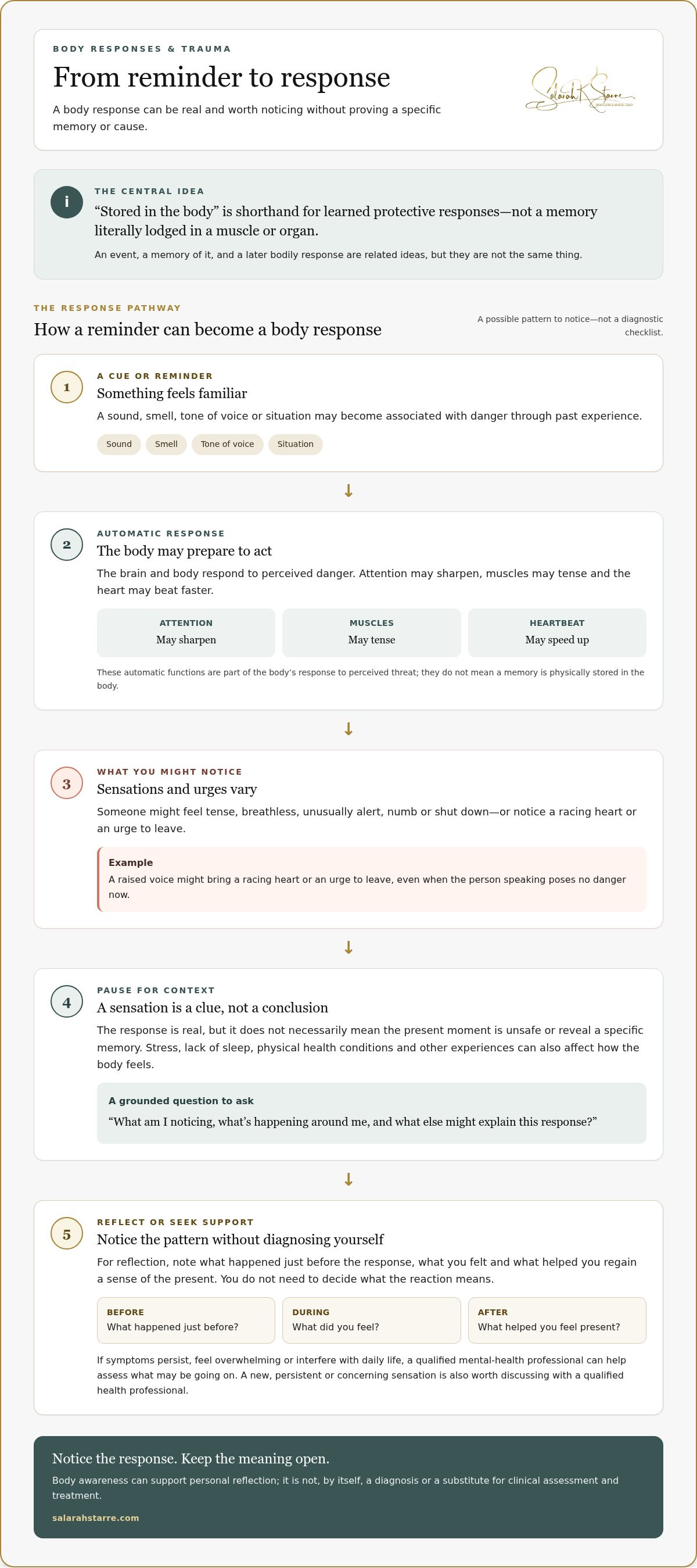
The phrase how trauma is stored in the body is best understood as shorthand for learned responses, not memories physically lodged in muscles or organs. A traumatic event is something that happened; a memory is how the experience may be recalled; and later emotional or bodily responses are reactions that can arise in particular situations. These ideas are related, but they aren’t the same thing.
The phrase resonates because a person’s reactions can continue after immediate danger has passed. A reminder may bring a surge of fear, tension or alertness, even when the present situation is different. It can feel as if the past has arrived in the room. That doesn’t mean the body is replaying a complete memory, or that every sensation has a trauma-related cause. Psychological trauma can have wide-ranging effects, but one sensation alone can’t establish what caused it.
Is trauma literally stored in muscles or organs?
No. “Stored in the body” is a metaphor for patterns in how someone may feel and respond, not the literal biological storage of an event in a particular body part. Perceived threat and reminders can accompany changes in bodily feeling, such as tension or a faster heartbeat. But there’s no reliable basis for assigning a specific memory or emotion to a particular muscle or organ. A tight shoulder, for example, can have many explanations.
What does an embodied response to trauma mean?
An embodied response is a change in bodily feeling or readiness that may be linked to perceived threat. Someone might notice their muscles tightening during conflict, their heart racing when startled, or a sense of being frozen when overwhelmed. These examples can help describe an experience, but they aren’t a checklist or diagnosis. Similar sensations may arise for many reasons, including everyday stress or physical health factors.
Think of body awareness as information to notice, not evidence that proves a particular event occurred. Rather than asking “Which body part is holding my trauma?”, try asking “What am I noticing, what’s happening around me, and what else might explain this response?” That shift leaves room for curiosity without forcing a conclusion. If a sensation is new, persistent or concerning, consider discussing it with a qualified health professional.
How can trauma shape the nervous system, memory, and body responses?
The brain and body respond to perceived danger. Attention may sharpen, muscles may tense and the heart may beat faster as the body prepares to act. This automatic regulation involves the autonomic nervous system, which helps manage functions such as heart rate and breathing. These responses can be protective in danger, yet confusing or intense when they arise in a situation that is safe now.
A learned threat response can shape how the body reacts; it doesn’t mean a memory is literally stored in the body. This distinction helps explain why a response may feel connected to the past without treating every physical sensation as proof of a particular experience.
What role do the brain and nervous system play?
Threat and memory involve connected brain systems, not a single switch. The amygdala is involved in processing emotionally significant information, including potential threats. The hippocampus contributes to memory and context, helping experiences relate to where and when they occurred. Both work as part of broader networks, alongside other brain regions and the body. Trauma responses can’t be reduced to one area or one simple mechanism.
People also vary in how they remember difficult experiences. Some recall a clear sequence; others describe memories that feel fragmented, sensory or hard to bring to mind. There’s no single pattern everyone must have, and difficulty recalling an event doesn’t, on its own, establish what happened.
Why can a reminder trigger a physical reaction?
A sound, smell, tone of voice or situation may become associated with danger through past experience. Later, a similar cue can prompt an automatic reaction before someone has time to assess what’s happening. For example, a raised voice might bring a racing heart or an urge to leave, even if the person speaking poses no danger now. The sensation is real, but it doesn’t necessarily mean the current moment is unsafe.
Context matters. Stress, lack of sleep, physical health conditions and other experiences can also affect alertness, breathing, heart rate and muscle tension. A reaction can be worth noticing, but it isn’t a diagnosis or a reliable way to identify a specific memory. If symptoms persist, feel overwhelming or interfere with daily life, a qualified mental-health professional can help assess what may be going on.
For personal reflection, notice what happened just before a response, what you felt and what helped you regain a sense of the present. You might jot down the situation, the sensation and what followed, without deciding what the reaction means. This isn’t a substitute for clinical assessment or trauma treatment. If you’d like a personal-development space to explore patterns and self-awareness, learn more about coaching for personal reflection.
Which body sensations can be linked with trauma, and what can they tell you?
Some people notice physical changes alongside distress or reminders of past events. These may include feeling tense, breathless, unusually alert, numb or shut down. The changes can offer a clue about what you’re experiencing in the moment, but they can’t reveal a complete story about the cause. Responses differ between people and can shift with context, health and stress.
No single physical sensation can establish a trauma history. Treat the examples below as possibilities, not a checklist for identifying trauma or confirming a memory.
| Sensation | Possible response pattern | Why it isn’t conclusive |
|---|---|---|
| Muscle tension | Bracing or holding the body rigid | Can also relate to posture, activity, pain or everyday stress. |
| Breath changes | Shallow, rapid or held breathing during heightened arousal | Breathing can change for many emotional or physical reasons. |
| Startling easily | Being highly alert to sudden sounds or movement | Alertness may be affected by stress, sleep or other circumstances. |
| Numbness or feeling shut down | Feeling detached, distant or less responsive | These experiences can have different causes and need context. |
| Restlessness | Feeling driven to move, pace or leave | It may accompany anxiety or other forms of discomfort, not only trauma. |
Can trauma show up as tension, numbness, or feeling on edge?
It can. Some people describe heightened alertness, with their attention drawn to possible danger; others may feel distant, numb or less able to respond. A person might also move between these experiences. They aren’t fixed categories, and there’s no universal body map linking a particular sensation or area to one emotion or memory. Notice patterns gently, without turning them into a self-test.
How can you tell a trauma response from another cause?
Often, you can’t tell from a sensation alone. Stress, poor sleep, medication and physical health can all affect how the body feels and responds. Online symptom lists can’t reliably distinguish these causes, so avoid self-diagnosing from an isolated sign. Instead, consider when the sensation occurs, how long it lasts and whether anything seems to affect it. If symptoms persist, cause distress or disrupt daily life, seek an assessment from a qualified health professional. That’s a grounded next step, not a conclusion about what your experience means.
What can you do when a body response feels overwhelming?
Start with choice, not force. You don’t have to push through a sensation, breathe in a particular way or search for a hidden meaning. If it feels manageable, try this brief sequence. Skip any step that feels uncomfortable, and stop if your distress increases.
- Pause. If you can, give yourself a moment before deciding what to do next. You might sit down, step away from a noisy space or ask someone you trust to stay with you.
- Orient to the present. Look around and name a few neutral details, such as the colour of a wall, the shape of a table or the sound of traffic outside.
- Notice, without forcing. You might acknowledge a sensation, or simply recognise that you feel unsettled. You don’t need to scan your whole body or explain why it’s happening.
- Choose one manageable next step. That could be getting a drink of water, moving somewhere quieter or contacting someone supportive.
How can you feel more grounded in the present?
Grounding is an invitation to notice what’s around you now, not a technique you have to perform correctly. Keep your eyes open if that feels better. You could gently shift position or press your feet against the floor, but skip movement or any other suggestion that doesn’t feel right. The aim is present-moment orientation, not to erase trauma or make every difficult sensation disappear. If focusing inward makes things worse, turn your attention towards a neutral object or stop.
There’s no universal exercise. Some people find slow breathing or visualisation helpful; others find that focusing on their breath or imagining a scene increases discomfort. You’re allowed to choose what feels tolerable, adapt it or do nothing from this list. The idea of how trauma is stored in the body can invite curiosity, but it shouldn’t pressure you to relive an experience or interpret a sensation on your own.
When is professional mental-health support worth considering?
Consider seeking an assessment if distress persists, flashbacks recur, sleep is disrupted or symptoms interfere with work, relationships or everyday activities. A qualified mental-health professional can explore what’s happening, assess your needs and discuss suitable care. These signs don’t establish a diagnosis, and you don’t need to work it out alone. Coaching can offer a space for personal reflection and development, but it doesn’t diagnose or treat trauma-related conditions, or replace clinical or medical care.
If you’re looking for a space to reflect on personal patterns and build self-awareness, explore one-to-one coaching for personal development. Keep the distinction clear: coaching can support reflection, while persistent or impairing symptoms call for clinical assessment.
How can body awareness support reflection without becoming trauma treatment?
Body awareness can help you notice what’s happening, but it can’t confirm why it’s happening. A tight jaw, sudden unease or urge to withdraw may be useful information about your present experience. It isn’t proof of a past event, a hidden memory or a particular diagnosis. You can stay curious without forcing an explanation.
How can body awareness help you notice familiar patterns?
If it feels comfortable, note the context, your feelings and your response. For example, you might record that a busy meeting left you tense, or that a particular conversation made you want to go quiet. Look for patterns over time, but leave room for uncertainty: the same reaction may have more than one explanation. You don’t need to search for memories or interpret a sensation as evidence. A useful starting point is this reflection on nervous-system awareness and manifestation.
Where do coaching and clinical trauma care differ?
Coaching supports personal development and reflection. It isn’t psychotherapy or clinical trauma treatment, and it can’t diagnose PTSD, establish what happened or promise to release trauma. If distress is persistent or disrupts daily life, seek assessment and care from a qualified mental-health professional. Coaching can sit alongside personal growth, but it doesn’t replace clinical or medical support.
Salarah K Starre’s work includes nervous-system awareness and shadow work as lenses for exploring personal patterns, not as treatment for trauma. The phrase how trauma is stored in the body can prompt reflection, but your sensations alone can’t tell you what caused them. If you’d like to explore self-sabotage as a personal-development topic, read about shadow work for self-sabotage. Take what supports reflection, leave what doesn’t, and seek clinical care for clinical needs.
Understand your responses, then choose your next step
The phrase how trauma is stored in the body describes learned responses, not memories physically lodged in tissue. Bodily sensations may be part of how you respond to perceived threat or reminders, but no single sensation proves trauma or explains its cause.
Notice what you feel and the context around it without forcing a memory or interpretation. If distress persists, disrupts daily life or feels unmanageable, a qualified mental-health professional can assess your needs. Body awareness may support reflection, but it isn’t a diagnosis or a substitute for clinical care.
For personal development, explore Salarah’s approach to personal transformation. Salarah K Starre brings nearly two decades of experience in mindset and manifestation coaching, alongside her work as a bestselling author and podcast host. If you’re ready to explore personal patterns and build self-trust through coaching, take the next step with Salarah.
Frequently Asked Questions
Is trauma literally stored in the body?
No. “How trauma is stored in the body” is a phrase for learned patterns of response, not memories physically lodged in muscles or organs. A past experience may be associated with later emotional or physical reactions, especially around reminders, but sensations don’t contain a complete record of what happened. There’s no reliable body map that assigns a particular memory or emotion to a specific area.
Can trauma cause physical symptoms years later?
Some people experience physical reactions long after a traumatic event, particularly when something reminds them of it. Responses might include tension, a racing heart or changes in breathing. But these symptoms can also have other causes, including stress, sleep difficulties, medication or physical health conditions. If a symptom is new, persistent or worrying, speak with a qualified health professional rather than assuming trauma is the cause.
How does trauma affect the nervous system?
Trauma can influence how a person responds to perceived danger. The autonomic nervous system helps regulate automatic functions such as heart rate and breathing, and threat responses may involve changes in alertness and bodily readiness. Memory and threat processing involve broader, connected brain systems, not one isolated area. People’s experiences differ, and this explanation can’t diagnose a trauma-related condition.
Can you release trauma stored in your body?
There isn’t a literal store of trauma in the body that can simply be released. If difficult reactions persist, a qualified mental-health professional can assess what’s happening and discuss suitable care. Grounding or body awareness may help some people orient to the present, but they aren’t cures and won’t suit everyone. Coaching can support personal development, but it isn’t trauma treatment or a substitute for clinical care.
What does a trauma response feel like in the body?
It can feel different from person to person. Someone might notice tension, a racing heart, changes in breathing, restlessness, numbness or feeling shut down, particularly around a reminder of past danger. These are possible experiences, not a definitive checklist. Similar sensations can arise for many reasons, so notice when they occur and seek professional advice if they cause distress or affect everyday life.
Can body sensations prove that I have trauma?
No. A sensation, posture or physical reaction can’t prove that you have experienced trauma or confirm a particular memory. The same response may have several explanations, including stress or a physical health issue. Avoid diagnosing yourself from online symptom lists. If you’re concerned, or symptoms persist or disrupt daily life, a qualified mental-health professional can assess your experience and discuss appropriate next steps.


